Name: Karl Kristian S. Bambini
Email: kksbambini@gmail.com
Telephone: 939 87 487
Biography
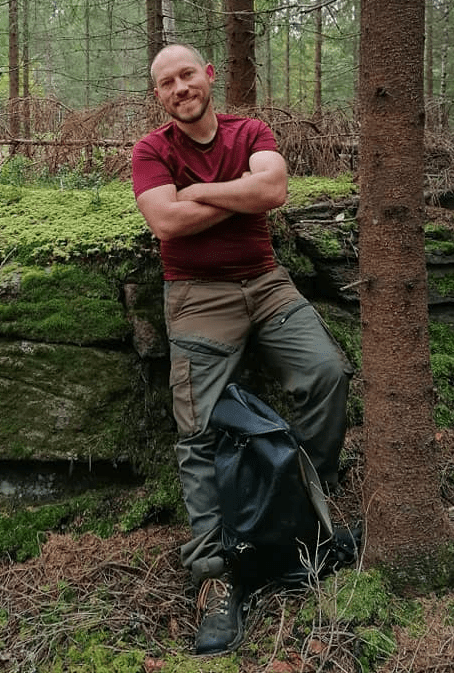
Greetings! I’m the Nordic GM, a professional Game Master in Oslo for Dungeons & Dragons (D&D) 5e, the world’s most popular TTRPG. I have been in love with roleplaying games like D&D since high school, and am excited to share my enthusiasm for fantasy/SF storytelling with the Oslo community.
In addition to having published work on dystopian narratives, I have a bachelor in literature and psychology, and a masters degree on utopian narratives. I run an active Science Fiction and Fantasy book club here in Oslo that meets once a month, and am a member of several academic and philosophical discussion groups.
I’ve worked as a licensed stockbroker in both Norway and New York and have spent several years in administrative work and teaching. I come from the USA, am married, and have one lovely daughter. I speak fluent Norwegian, though sessions are mainly in English (unless otherwise agreed upon). I have an American accent, though use many different accents and voices during sessions.
How stories are created
While D&D is a physical pen-and-paper game with rules, dice, and miniatures, the most important aspect is storytelling. It’s about friends and colleagues creating an adventure together. You will slay evil dragons, navigate court intrigues, uncover ancient jungle ruins, and scour the ocean floor for forgotten treasures. You will, in sum, become part of an epic narrative and use your role as a hero to fight injustice and right wrongs. How you do so is completely up to you. In D&D, you have tremendous freedom roleplaying your characters, choosing how they respond to situations and navigate the world. My job is to create this world and then guide you through it.
The most important element of storytelling is the narrative arc with its overarching goal. Players must have a clear idea of what they need to accomplish, especially in shorter campaigns or one-shots. There must also be space for players to experience the world, allowing them to roleplay their characters and pursue their own goals and quests. In longer and shorter campaigns, I always weave player backgrounds into the main quest and setting. Good adventures also require tension. Players must feel that their actions have consequences. Whether they are navigating a storm at sea, fighting a villain, or manipulating a powerful ruler, player choices will impact both the world and NPCs around them. Players navigate a living world. While players quest in one area, the world marches on in others. The decision of where to go will be just as important as what to do. A good story blends narrative possibility with character agency (and the luck of the dice!). While failure is always a possibility, teamwork is the surest route to success in my sessions.
While I sometimes use off-the-shelf material for inspiration, I never run an adventure module exactly as written. Most of my adventures are either created from scratch or heavily adapted from existing content.
Crafting a session
Every Game Master is different in how they present their world. I tend to favor tactical combat and collective skill challenges (as they really encourage teamwork), alongside exploration and social encounters. I am a big fan of legendary monsters. Combat encounters are fun because they get the adrenalin pumping, but also because of all the unique materials I can bring to the table. I use a lot of miniatures in my combat encounters and these can range from simple laminated paper cut-outs to complex multi-part plastic kits or 3D-printed resin miniatures (which I print myself).
I am a big supporter of map-makers and 3D designers on Patreon and have purchased countless D&D assets on DMsGuild and DriveThruRPG. I also use a lot of foam-core terrain, washable battlemaps, dice trays, and handouts in my sessions. My terrain is often multi-leveled, encouraging players to think in three dimensions as they fight and jockey for position. Most of my crafting is posted on Instagram here. While none of these assets are strictly necessary for playing Dungeons and Dragons (as most adventures can be run as “theater of the mind”), they are really fun and immersive, spicing up the aesthetics of social encounters and encouraging tactical teamwork in combat situations.
Rules at the table
I have strong rules against toxic behavior. No bullying, no sexual violence, no dominating the narrative, no rules-lawyers. Saying, “This is what my character would do,” is no excuse. Any disagreements with my DMing style or rulings at the table can (and should) be noted, however my job is to make sure that everyone at the table has the fair and equal possibility to enjoy their characters!
Jeremy Crawford, the primary rules-master for Wizard of the Coast, encourages people to play D&D with “Rules As Fun” (RAF), as opposed to over “Rules As Written” (RAW), in mind. While rules are important and give a common structure to sessions, they shouldn’t bog down the game or limit player actions. Players will have different knowledge sets, experiences, and backgrounds, and I want everyone to feel free to explore their roleplaying potential. Even as a professional GM, I don’t have a photographic memory of all the rules and errata, and will therefore play loose and fast with rulings where necessary. Prioritizing RAF over RAW also helps encourage creativity and keeps the pacing up. Disagreements and discussions on rulings can be taken up after sessions are completed.
My primary role at the table to is to ensure that every single player has a good time, and I take this role very seriously. Beginners are encouraged to join. I will always spend extra time easing new players into the game, discussing their class choices, and reviewing their backstories. For veteran players, I will strive to challenge your builds and make sure encounters, locales, and NPCs are unique and engaging.
I’ll see you at the table!
 Nordic Roleplay and Storytelling